

Vaccinations — you have to get them unless you qualify for a medical and religious exemption
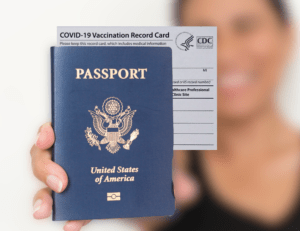 To get a green card through marriage, you need to undergo a medical exam with a USCIS approved doctor. You can find the doctors using the tool at this website. The doctor will give you a sealed envelope with Form I-693. You should also request an unsealed copy of Form I-693 so that your attorney can review it.
The medical exam requires you to have certain vaccinations. You can find the vaccination list at this link. There may be vaccinations that you cannot get right now due to your current age or health reasons. If so, there is no problem, and those would be considered medical waivers to the vaccination requirement. However, if the doctor determines that you need a vaccination and you do not want to take it for a medical reason and the doctor does not agree, you will have a problem.
Also, you may not want to get a vaccination for religious reasons. Those waivers are difficult to obtain, and you must show the following:
- You are opposed to all vaccinations in any form.: This means you are opposed to all vaccinations, not just a specific vaccination such as the flu or COVID vaccinations. You may have received vaccinations as a child, but as long as you have not received any as an adult, you may be able to meet this requirement.
- Your objection must be based on religious beliefs or moral convictions.: You have to show that you belong to an actual religion that holds an actual opposition to vaccinations. A mere preference of yours won’t cut it.
The religious belief or moral conviction must be sincere.: Again, you have to show that you are part of a religion that holds this belief. If you just joined the religion recently, you’ll have more difficulty proving that this is a “sincere” religious belief.
If you need to talk to an experienced immigration attorney. We’ve helped hundreds of people traverse the complicated immigration and citizenship process. We would love to help you as well. Call (617-744-7919) or email hello@cambridgeimmigrationlaw.com to get in touch.

 You should get your medical exam completed before you file your green card for two important reasons. First, you–and I as your attorney–want to see if any issues come up with your medical exam. For example, a client recently conducted her medical exam and learned that she was positive for TB (tuberculosis). With that diagnosis, she is not eligible for a green card. She needed to get the necessary treatment–which took 8 months–in order to get a clear and complete medical exam. If she had filed without the medical exam, waited for an RFE, and then learned that she had TB, she may not have been able to respond to the RFE by the 3-month deadline and her entire case would have been denied, and she would have had to start over. Sometimes, even when we see negative results, we file the application due to certain legal issues. However, it’s best to decide to file without the medical exam knowing why you’re applying without the medical exam.
  Before you do anything with the government, you should find out what records the government has about you. Here are a few examples why:
 Generally, having prior or pending immigration applications is not a problem. However, if you want to file for a nonimmigrant visa AFTER you file for a green card, you may have a problem showing that you intend to return to your home country. Also, if you’ve filed or will file other applications, you want to make sure that they are all consistent. If you see a mistake on a past application, don’t change your current application to fit the mistake–figure out with your experienced immigration attorney if you can safely bring the mistake to the attention of USCIS when you file a new application with the updated answer. Finally, make sure to share a copy of all your prior applications with your new attorney. If you don’t have copies of them, request them with a Freedom of Information Act (FOIA) Request.
 This won’t be a problem for a spouse of a US citizen UNLESS the person worked without permission and then did NOT disclose that fact when asked about it on an online immigration application, paper submitted application, or in person with an immigration official. A common situation is for a student on an F-visa to babysit while he is in school, and then not disclose that when asked about it on an online immigration application, paper submitted application, or in person with an immigration official. If you’re asked by a US immigration official about unauthorized work and you lie, you may turn a non-problem (the work) into a big problem (lying, fraud, misrepresentation).
  If you’re trying to figure out if you’re eligible to get a green card based on your marriage to a US citizen or lawful permanent resident, you need to get some marriage documents in order. First, you’ll need a certified copy of your current marriage certificate. If the certificate is not in English, you’ll need an English translation of the document. You can use an online translation service, or you can use a simple Certificate of Translation, like we will show you
  There are special (usually positive) issues for Canadians as related to being in the US, even if they “overstay.” The reason is that the US government is not clear about whether Canadians who entered without a visa and who stay longer than 6 months actually have “overstayed.” If you are Canadian, the best course of action is to not stay longer in the US if you entered without a visa. If you did stay in the US more than 6 months (on this entry or prior entries), you need to speak with an experienced immigration attorney to determine if and how this will affect your eligibility for a green card.
  If you’ve overstayed more than 6 months in the US, and you leave, you will not be able to re-enter the US legally for 3 years, unless you are granted an I-601 waiver. If you’ve overstayed more than 1